
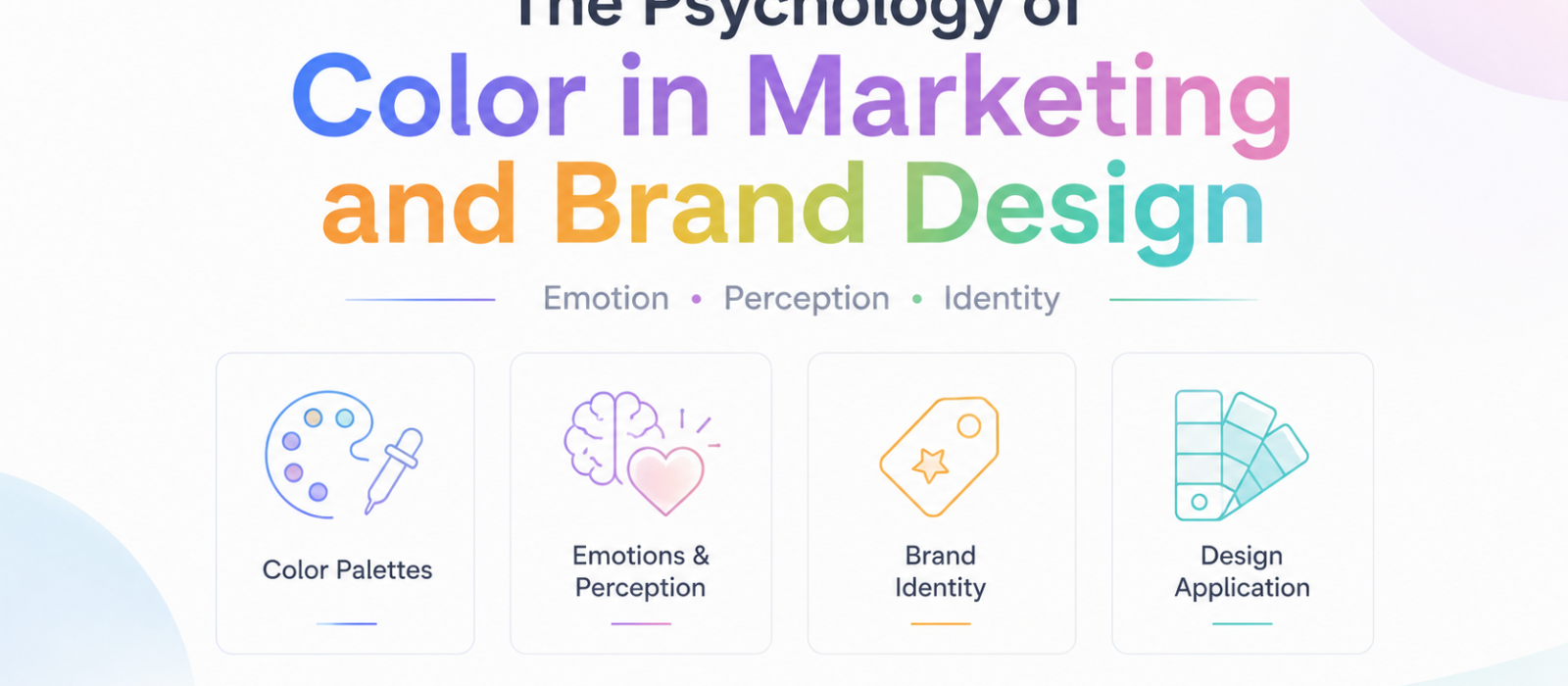
Color is one of the most powerful non-verbal communication tools in a marketer’s arsenal. Research shows that color can influence purchasing decisions, shape brand perception, and affect emotional response — often within milliseconds and below the level of conscious awareness. Understanding the psychology of color is not about following a rigid rulebook, but about making intentional choices that align with your brand’s desired emotional impact.
Different colors trigger predictable psychological associations, though these vary by culture and context. Blue communicates trust, reliability, and professionalism — which is why it dominates the financial and technology sectors. Red conveys urgency, energy, and passion, making it a favorite for clearance sales and call-to-action buttons. Green signals growth, health, and sustainability. Yellow evokes optimism and warmth. These are not arbitrary conventions — they are deeply embedded cultural associations that have been reinforced through decades of brand building.
The most strategic use of color in branding goes beyond these general associations to consider contrast, combination, and context. A well-designed color system uses a primary brand color that anchors brand recognition, supported by secondary colors that create visual hierarchy and emotional range. The teal and coral system at SlyQuest, for instance, pairs the trust and innovation of teal with the energy and urgency of coral — a deliberate combination designed to signal both credibility and momentum.