
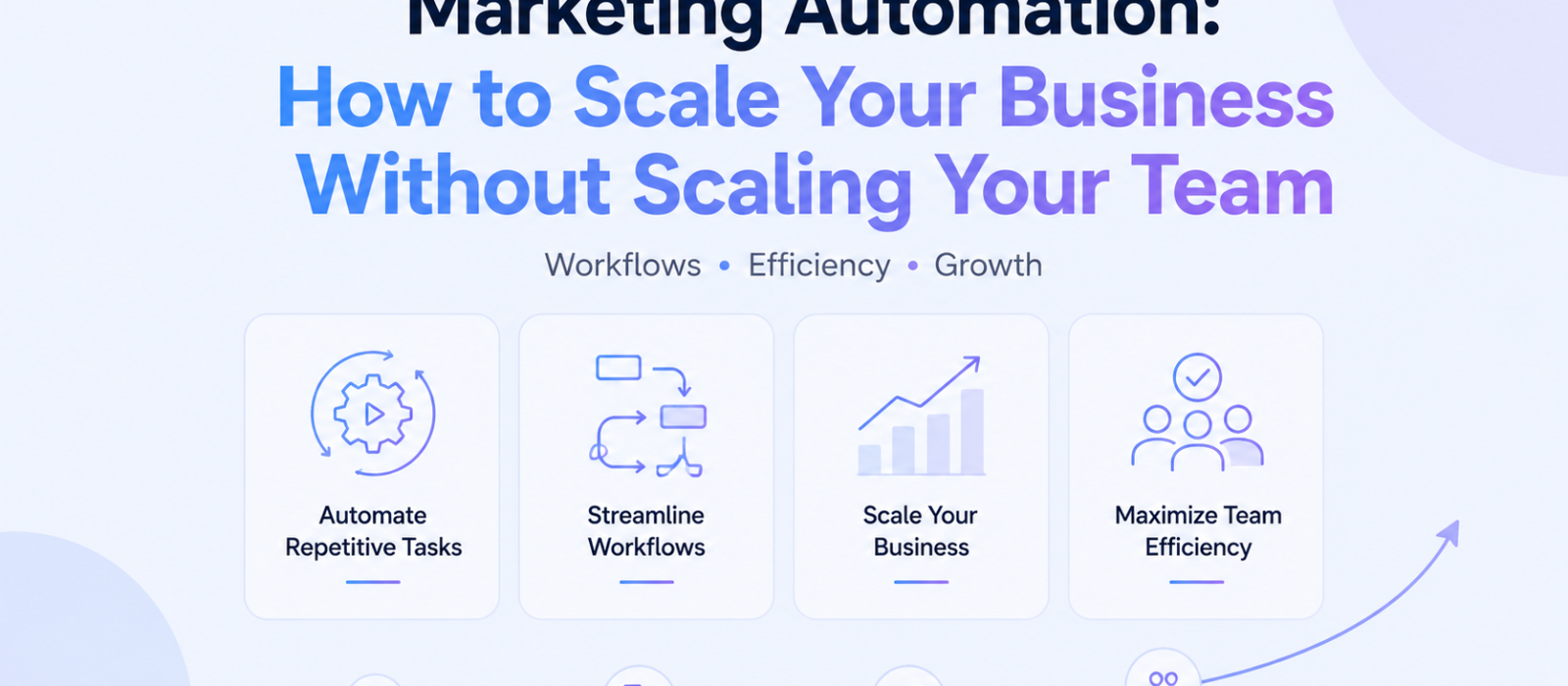
Marketing automation is one of the most powerful forces multipliers available to growing businesses. By automating repetitive, rule-based marketing tasks — email sequences, lead scoring, social scheduling, retargeting triggers, and CRM updates — marketing teams can execute campaigns at a scale and speed that would require ten times the headcount without automation. The result is faster growth, lower cost per acquisition, and a dramatically improved customer experience.
The entry point for most businesses is email automation. A well-designed welcome sequence that introduces new subscribers to your brand, delivers value, and moves them toward a first purchase can run continuously in the background, converting leads while your team focuses on higher-level strategy. Add an abandoned cart sequence for e-commerce brands, a lead nurture sequence for B2B companies, and a post-purchase sequence for any business looking to drive repeat sales, and you have a revenue-generating machine that never sleeps.
Advanced marketing automation goes further — integrating your CRM, website, advertising platforms, and customer support tools into a unified system that responds intelligently to customer behavior. A lead who views your pricing page three times without converting can automatically trigger a personalized follow-up email and a retargeting ad — all without human intervention. Building these systems requires upfront investment in time and technology, but the compounding returns over months and years make automation one of the highest-ROI initiatives any marketing team can undertake.